Why You Should Light a Fire Without Firelighters: Eco-Friendly and Cost-Effective Tips

There is something undeniably primal and satisfying about building a fire from scratch. For many of us in the UK, the colder months bring the familiar ritual of lighting the wood burner or open fireplace to ward off the damp chill. It’s a skill that feels essential, yet many people rely heavily on chemical aids to get the job done.
We often reach for the box of white chemical cubes without a second thought. While convenient, this reliance masks a simple truth: you can achieve a cleaner, more satisfying burn using natural methods. By swapping out chemical aids for premium wood kindling, you not only reduce your environmental footprint but often save money in the process.
This guide explores the art of fire lighting without artificial helpers, offering you the expertise needed to master your hearth naturally.
Best Methods for Starting Wood Fires
Lighting a fire is as much about physics as it is about materials. The goal is to create a structure that allows for maximum airflow while concentrating heat. Over the years, several reliable methods have emerged, each with its own set of pros and cons.
The Teepee Method
This is perhaps the most iconic fire-lighting structure. You arrange your premium wood kindling in a cone shape over a central bundle of tinder.
- Pros: The vertical structure encourages flames to rise quickly, igniting the larger logs placed on top later. It creates a strong draft.
- Cons: It can be unstable. If the teepee collapses too early, it might smother the fledgling flame.
The Log Cabin (or Jenga) Method
Here, you stack pieces of wood in a square, alternating directions with each layer, much like a log cabin toy. Tinder and kindling go in the center.
- Pros: This structure is incredibly stable and allows for excellent airflow. It tends to burn longer and requires less maintenance once lit.
- Cons: It requires more wood upfront to build the structure properly.
The Top-Down Method (Upside Down Fire)
This modern favorite involves placing large logs at the bottom and progressively smaller logs and kindling on top. You light the fire at the very top.
- Pros: It produces significantly less smoke during the startup phase (great for cold flues) and burns slowly and steadily without needing attention for a long time.
- Cons: It takes a bit of practice to get the ratios right so the fire travels down effectively.
While modern fire starter kits exist, they often contain paraffin or kerosene. By mastering these structural methods, you remove the need for chemical accelerants entirely, relying instead on the superior dryness and combustibility of high-quality wood.
How to Light a Fire Without Firelighters
Learning to light a fire without firelighters is a skill that separates the novice from the expert. It requires patience and a good understanding of your materials. The secret lies in the preparation of your “fuel ladder”—graduating from the smallest spark to the largest log.
Step-by-Step Guide
- Prepare Your Bed: Ensure your grate is clean, but leave a small bed of ash (about an inch) if you are burning wood, as it insulates the coals.
- Gather Your Tinder: Instead of chemical cubes, look for natural tinder. Excellent options include:
- Dried Birch Bark: Contains natural oils that burn fiercely.
- Wood Shavings: If you have any from chopping wood.
- Dried Orange Peel: A surprising but effective aromatic tinder.
- Newspaper: Tightly twisted knots of paper work well, though they produce more ash.
- Build the Core: Place a generous handful of your natural tinder in the center of the grate.
- Add the Kindling: This is the crucial step. Arrange your premium wood kindling around the tinder. Don’t smother it; fire needs oxygen. If using the Teepee method, lean the sticks against each other over the tinder.
- Light It Up: Strike a match and light the tinder in several places.
- Wait and Watch: Do not add logs yet. Wait until the kindling is burning vigorously. The wood should be crackling and the flames establishing a strong heat base.
- Add Small Logs: Once the kindling has collapsed into a hot bed of embers, add your smaller logs.
The Sustainability Factor
By using waste products like dried twigs, bark, or high-quality kindling scraps, you are participating in a cycle of sustainability. You aren’t purchasing single-use plastics or chemicals wrapped in foil. It is a cost-effective approach that utilizes what nature provides or what can be bought in bulk efficiently.
Choosing the Right Wood Kindling
You cannot start a good fire with bad wood. This is the golden rule of heating. If you try to light a fire without firelighters using damp or green wood, you will only succeed in filling your room with smoke.
Premium wood kindling is distinct from gathering random sticks from the garden. Garden waste is often too high in moisture (anything over 20% moisture content is inefficient). Premium kindling is kiln-dried to an ultra-low moisture content, usually below 10%. This ensures it catches fire instantly and burns hot enough to ignite your larger logs.
Indoor vs. Outdoor Needs
- Indoor Wood Burners: You need ultra-dry, clean wood to prevent creosote buildup in your chimney. Softwood kindling (like pine or spruce) is ideal here because it flares up quickly and gets the flue warm fast, establishing the draft.
- Outdoor Fires/Camping: While you can use foraged wood, having a bag of dry kindling is a lifesaver, especially in the damp UK climate. Hardwood kindling can be better here as it creates a longer-lasting coal bed for cooking.
Tips for Sustaining the Fire Once It’s Lit
Starting the fire is only the first battle; keeping it burning efficiently is the war. A fire that constantly goes out or smolders is frustrating and inefficient.
Airflow Management
Your stove’s vents are the accelerator and brake of your fire.
- Upon Lighting: Keep all vents fully open. You want maximum oxygen to get the temperature up.
- Once Established: When the logs are burning well, close the bottom vents to slow the burn rate, but keep the top vents (air wash) open to keep the glass clean and feed the flames.
Log Placement
Never throw a log onto a fire haphazardly. Place it.
- The “X” formation: Crossing logs creates pockets of heat.
- Parallel placement: Placing logs side-by-side (with a small gap) can trap heat between them, encouraging them to burn off each other’s radiation.
Safety First
In the UK, chimney fires are a real risk.
- Ensure your chimney is swept at least once a year.
- Use a fireguard for open fires to prevent sparks from jumping onto carpets.
- Never leave a fire unattended, whether indoors or out.
Common Mistakes to Avoid When Starting a Fire
Even seasoned fire-starters make mistakes. Avoiding these pitfalls will ensure a roaring blaze every time.
1. Using Damp Wood
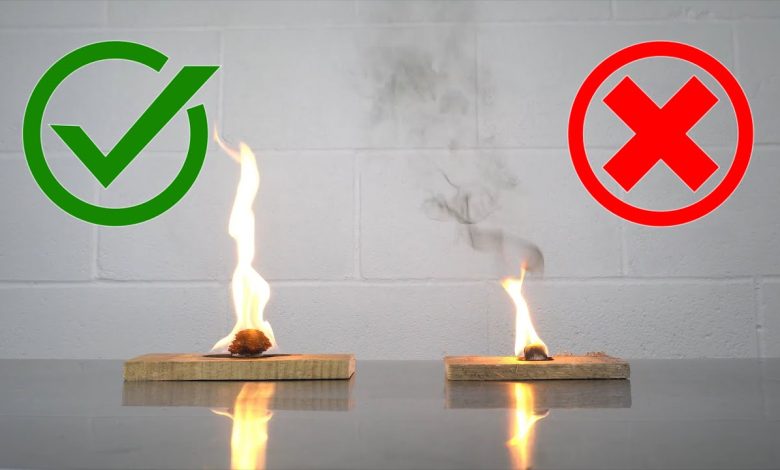
This is the number one cause of failure. Wet wood spends all its energy boiling off water rather than producing heat. It hisses, smokes, and blacks the stove glass. Always use wood with moisture content below 20%.
2. Overcrowding the Fire Pit
It is tempting to stuff the stove full to “get it over with.” However, fire breathes. If you pack it too tight, you cut off the oxygen supply, and the fire will suffocate.
3. Adding Logs Too Soon
Patience is key. If you throw a heavy log onto a weak flame, the cold mass of the log will cool the firebox and kill the fire. Wait for a bed of red-hot embers from your premium wood kindling before adding the main fuel.
4. Ignoring the Ash Pan
A full ash pan blocks airflow from underneath. Empty it regularly to ensure oxygen can reach the heart of the fire.
Why Premium Wood Kindling Makes a Difference
You might wonder if buying specific kindling is worth the investment compared to chopping up old pallets or gathering twigs. The answer lies in consistency and energy density.
Premium wood kindling offers a guarantee. You know exactly what moisture content you are getting. It is cut to a uniform size, making it easier to stack and build your fire structures (like the log cabin).
Efficiency and Heat
Because it is kiln-dried, premium kindling has a higher calorific value per kilogram than air-dried wood. It releases heat immediately. This rapid rise in temperature is vital for:
- Warming the flue: A cold chimney pushes smoke back into the room. A hot, fast fire reverses this pressure quickly.
- Complete combustion: Hotter fires burn off the volatile gases in the wood, resulting in less pollution and more heat for your home.
When you compare this to struggling with damp garden twigs or newspaper that flares and dies in seconds, the value becomes clear. It transforms fire lighting from a chore into a reliable, enjoyable process.
Conclusion
Mastering the hearth is a blend of art and science. By learning to light a fire without firelighters, you embrace a more natural, sustainable way of heating your home. It reduces your reliance on chemicals and connects you more deeply with the elemental nature of fire.
The key to success, however, is not just technique—it is the quality of your fuel. Using damp or inconsistent wood will always lead to frustration. Investing in the right materials ensures a clean, hot, and efficient burn every time.
For those looking to stock up on the highest quality supplies, Lekto Woodfuels is a trusted UK supplier. They offer convenient delivery of premium wood kindling and sustainable logs directly to your door, ensuring you have everything you need for the perfect fire, right when you need it.